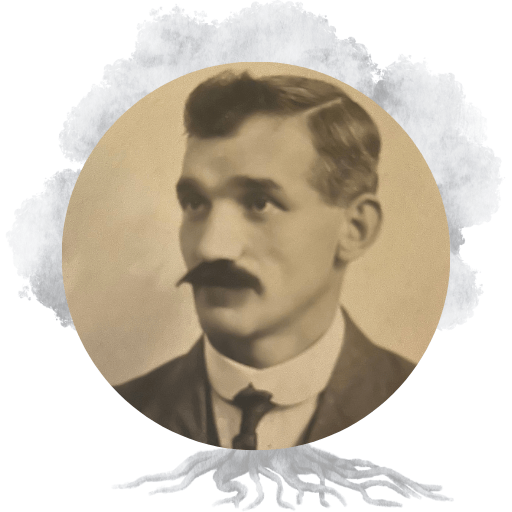
William Wyatt
1813 – 1875
Ashill, Somerset
William Wyatt was born on June 16th, 1813, in the quiet rural village of Ashill, Somerset. He was baptised shortly after, the son of John Wyatt, a humble labourer, and his wife Rosanna. Life in early 19th-century Somerset was hard, but honest work and strong community ties shaped William’s earliest years.
As a young man, William found his way south to Devon, where his life took a new direction. On February 26th, 1837, in the coastal parish of Seaton and Beer, he married Mary Anne Bucknole. The newlyweds settled in nearby Axmouth, where they began building a life rooted in the Anglican faith and the rhythms of the countryside.
In 1838, they welcomed their first child, a daughter named Elizabeth Ann. By 1841, the growing family was living in Little Hooknell, a cluster of cottages tucked into the hills of Branscombe. William worked as a farm labourer, and at home, he and Mary Ann were raising two small children, Elizabeth and their young son, Francis, who was just two years old.
Tragically, Francis disappears from the records after this time, and it is likely he died in infancy, a painful but all-too-common sorrow in those times.
Yet life continued, as it must. Over the following years, Mary Ann gave birth to a steady line of children: Samuel in 1842, Sarah in 1844, John in 1845, another son named Francis in 1847 (perhaps in memory of his lost brother), and Mary Ann in 1849.
By the time of the 1851 Census, the Wyatts were back in Ashdon, Branscombe. William, now well into his working life, was still a farm labourer, and the household was bustling. Alongside Mary Ann, the couple now had seven children under their roof: Elizabeth Ann (13), Francis (11), Samuel (4), Sarah (7), John (5), James (2), and baby Mary Ann, just 10 months old.
But the family wasn’t quite complete. In 1853, they welcomed another son, Korah. Then, in 1856, their youngest child, William, was born, named after his father.
By 1861, the Wyatts had returned to Little Hooknell. Some of the older children, like Elizabeth and the second Francis, had left the household, perhaps to work or marry. William was still labouring on the land, and his sons were beginning to follow in his footsteps. The family’s daughters took up the delicate and intricate trade of lacemaking, a common occupation for women in Devon’s countryside.
A decade later, in 1871, William was still in Little Hooknell, but life had changed once again. Mary Ann, his beloved wife, had passed away. Now a widower, William shared his home with his daughters Sarah, Cora (formerly Korah), and Mary Ann, as well as his youngest son, William. They also took in a lodger, Thomas Bridle, perhaps to help with expenses or simply to fill an empty space. The family’s roles were traditional but vital: the men worked the land, and the women crafted lace by hand.
In January of 1875, William Wyatt passed away at the age of 62. He had lived a full life, deeply rooted in the soil of Devon and Somerset, shaped by labour, love, and loss. His legacy lived on through his many children, each of whom carried forward the story of a quiet, hardworking man whose life helped build the generations that followed.
 Vogel Ancestry